
The cop who cheated death
'The level of violence that happens to a human body is pretty horrific'

The Mish started as a way to bring you longer, in-depth reporting about Dunedin and its people. It’s now time for The Mish to grow, to bring you more from New Zealand’s greatest city.
As a paying subscriber, this is the kind of content you can expect in addition to the Wednesday newsletter, which will remain free. By subscribing ($5 a month or $50 a year), you’ll be helping to support original, local reporting, and in return you’ll get early access to my OIA findings and the backstory behind some of my biggest yarns. Paying members will also be able to post comments and will have full access to the archive.
Welcome back, I hope you enjoy this one.
‘I’ll tell you every place I’ve been to a fatal crash,’ Sergeant Karl Hemmingsen told his eldest son - who is approaching driving age - on a recent trip from Dunedin to Clyde, Central Otago.
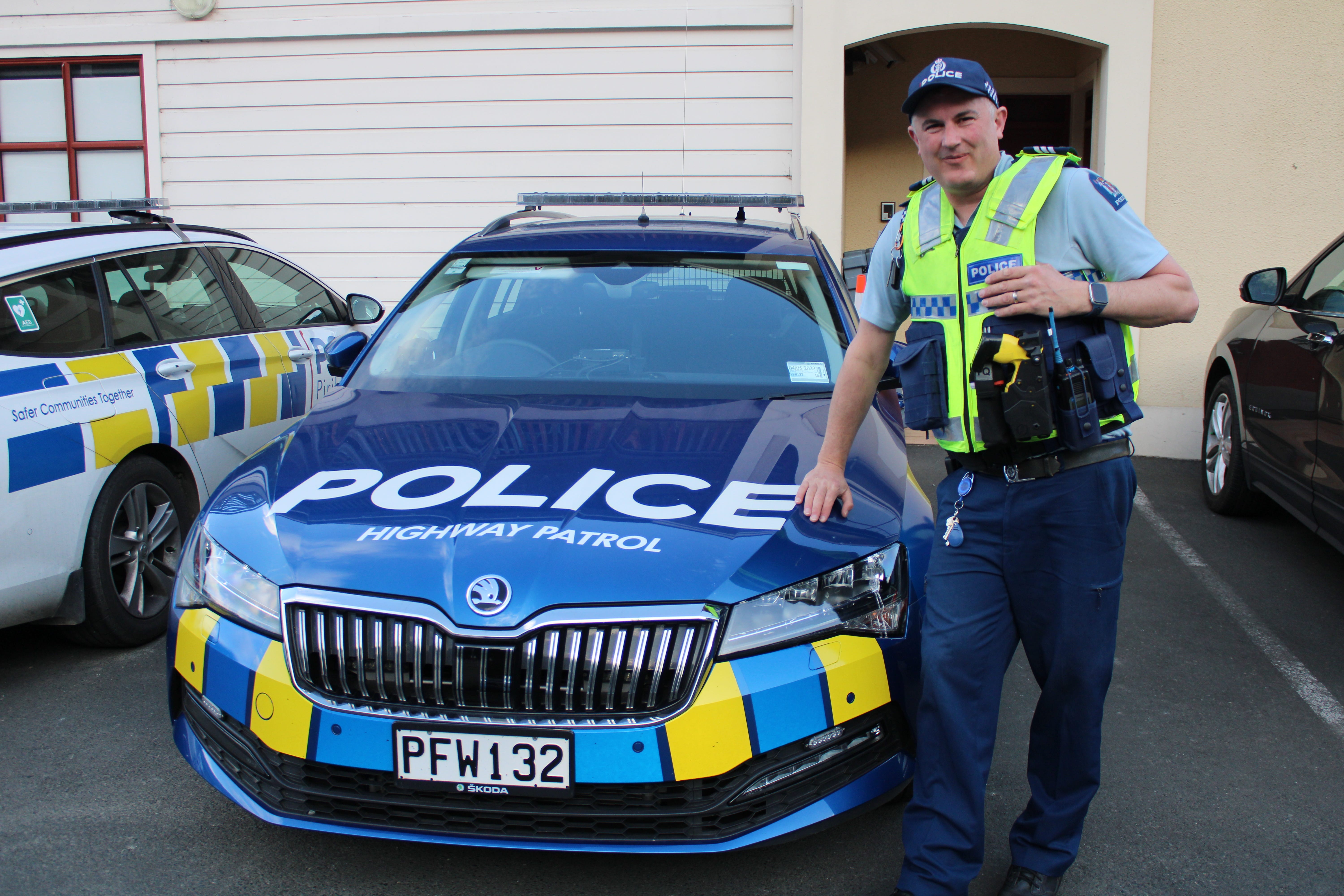
On that 200km journey he pointed to 19 places where people had lost their lives, and where he attended the immediate aftermath, either as a general duties’ constable, a police forensic photographer – a role he has had since 2006 – or over the last year working in road policing.
‘‘I couldn’t tell you of how many serious crashes I’ve attended,’’ Hemmingsen, a police officer with 23 years experience, said.
‘‘The level of violence that happens to a human body is pretty horrific.’’
And he should know. Hemmingsen was once revived after he was hit by a motorist while cycling to work on April 18, 2019.
‘‘He pulled out of an intersection in front of me, there was no time to react.’’
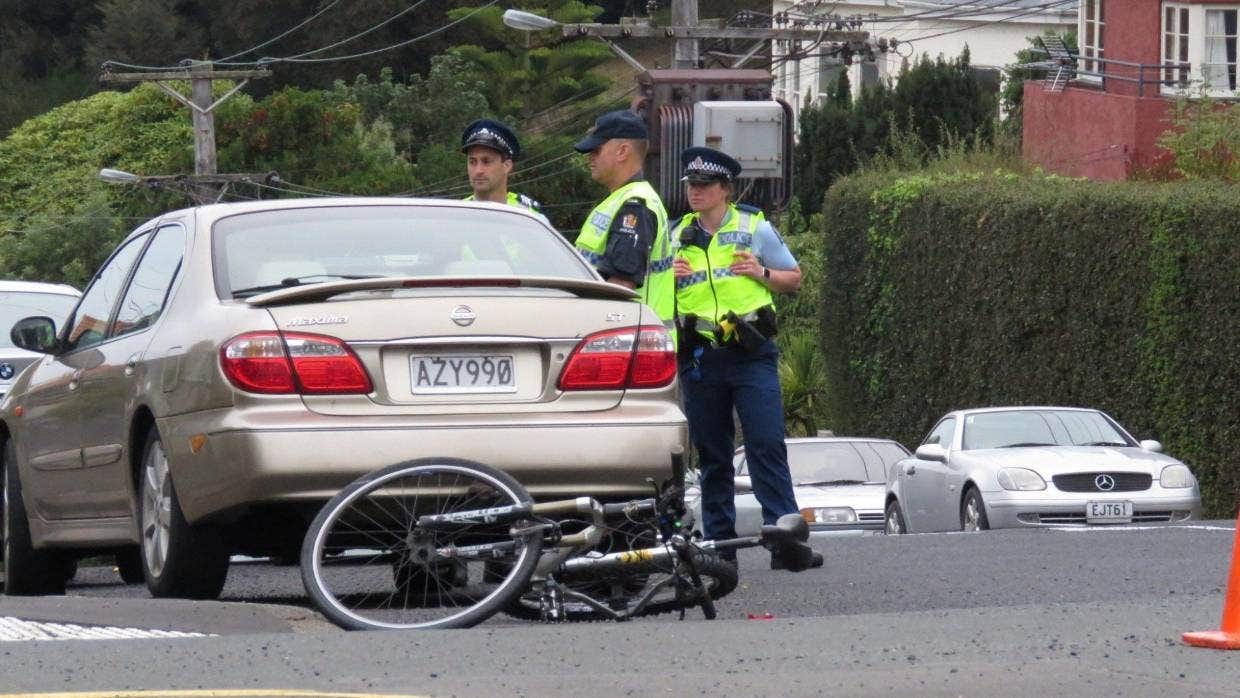
That crash left him with a broken jaw, neck, back, ribs, nose, and he lost some teeth: ‘‘my face was ripped open”.
The worst was one of his lungs popping, while the other filled with blood ‘‘and I had to be revived’’.
Three year later he was still feeling the impact of the crash, with visible scars and more surgeries scheduled.
‘‘So there is a little bit of personal experience, about being harmed on the road,’’ Hemmingsen, as he drives the unmarked police Skoda onto Dunedin’s Northern Motorway, said.
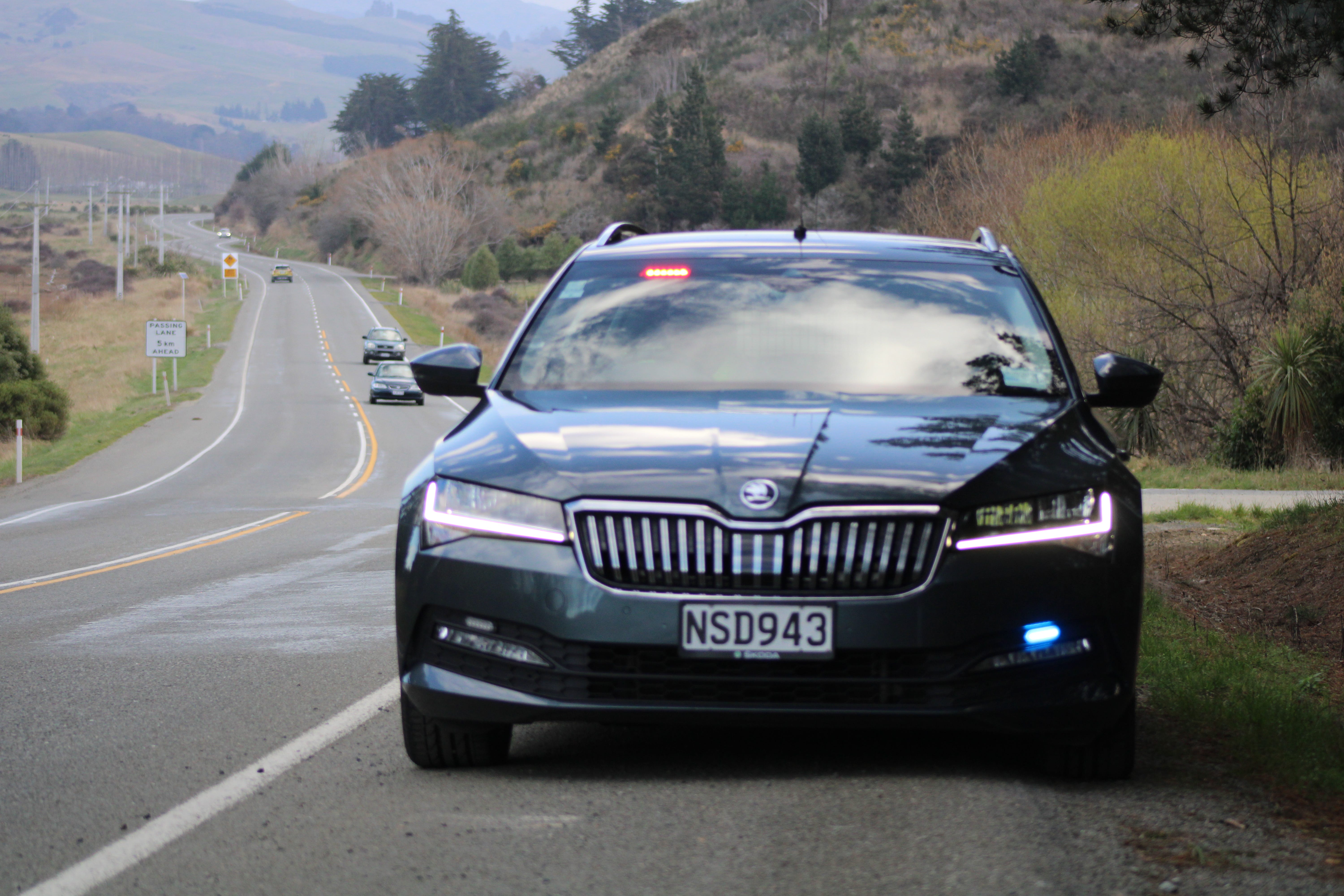
A noticeable change from the former Holden fleet, has been motorists not recognising even the marked new police vehicles, flashing them to warn them that police were on the road.
The flashing of the lights had the desired effect of making other motorists watch their speed, he said.
He had also been driving at 100kmph in the left-hand lane of a passing lane, when a motorist – an Australian tourist – overtook him at 143kmph just before Hampden.
While that incident wasn’t on a passing lane, many motorists ‘‘believe a passing lane is like the Autobahn”.
He recalled clocking a motorcyclist speeding from him at over 200kmph near Middlemarch - he got away - and a speeding Ferrari driver, who didn’t.
Off-duty police would also call *555 or 111 to report bad driving behaviour, as Hemmingsen did last weekend, when he saw a driver of a Jeep Cherokee pass him, two more cars and then a truck, before merging on a yellow line on a blind corner.
‘‘A car came over the hill, and I’m pretty sure the bumpers almost kissed.’’
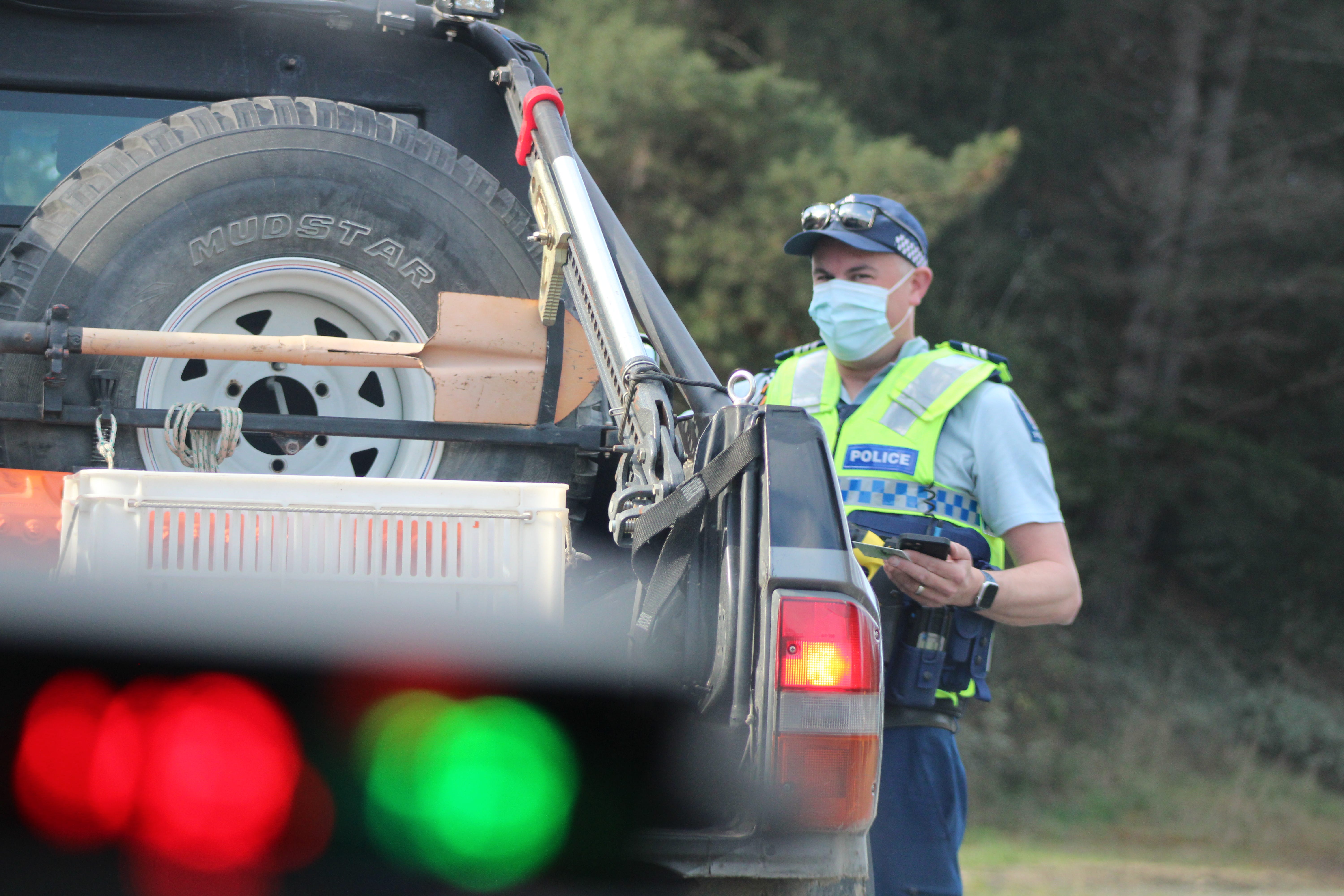
That jeep was later pulled over in Cromwell. Drivers regularly supplied similar footage of bad driving, as is what happened on State Highway 1 near Titri, south of Dunedin in July, which caused a courier van to roll and saw the offending driver charged.
‘‘Just because there are no police officers there, doesn’t mean we aren’t going to get calls. We follow these up and hold poor driving to account.’’
If Hemmingsen is travelling at 100kmph, there was no reason for other motorists to travel any faster.
That comes as police in the Southern District road policing manager, Inspector James Ure, put out a warning to southern motorists that police would focus on those driving above the speed limit, including those driving 0-10kmph above the speed limit.
A 1kmph decrease in mean speeds would lead to a 4-6% reduction in fatal crashes and serious injury, potentially saving around 16 lives nationally.
‘‘We used to have a tolerance, but there is no tolerance any more,’’ Hemmingsen said. He noted a speed camera would always tickets motorists if they speed - police included.
And by driving to the speed limit you were better prepared in case you encounter any of the ‘‘idiots out there’’, Hemmingsen said.
‘‘You have to factor in that you do not know what is coming around the corner.’’
One trick police employed to catch speeding motorist using radar detectors, was to switch their own speed radars off and activate it – via a remote control – when they saw an approaching motorist.
‘‘He’s doing 90,’’ Hemmingsen said of an oncoming motorist coming over the brow of a hill, as he activates the device, which duly reads 89kmph.
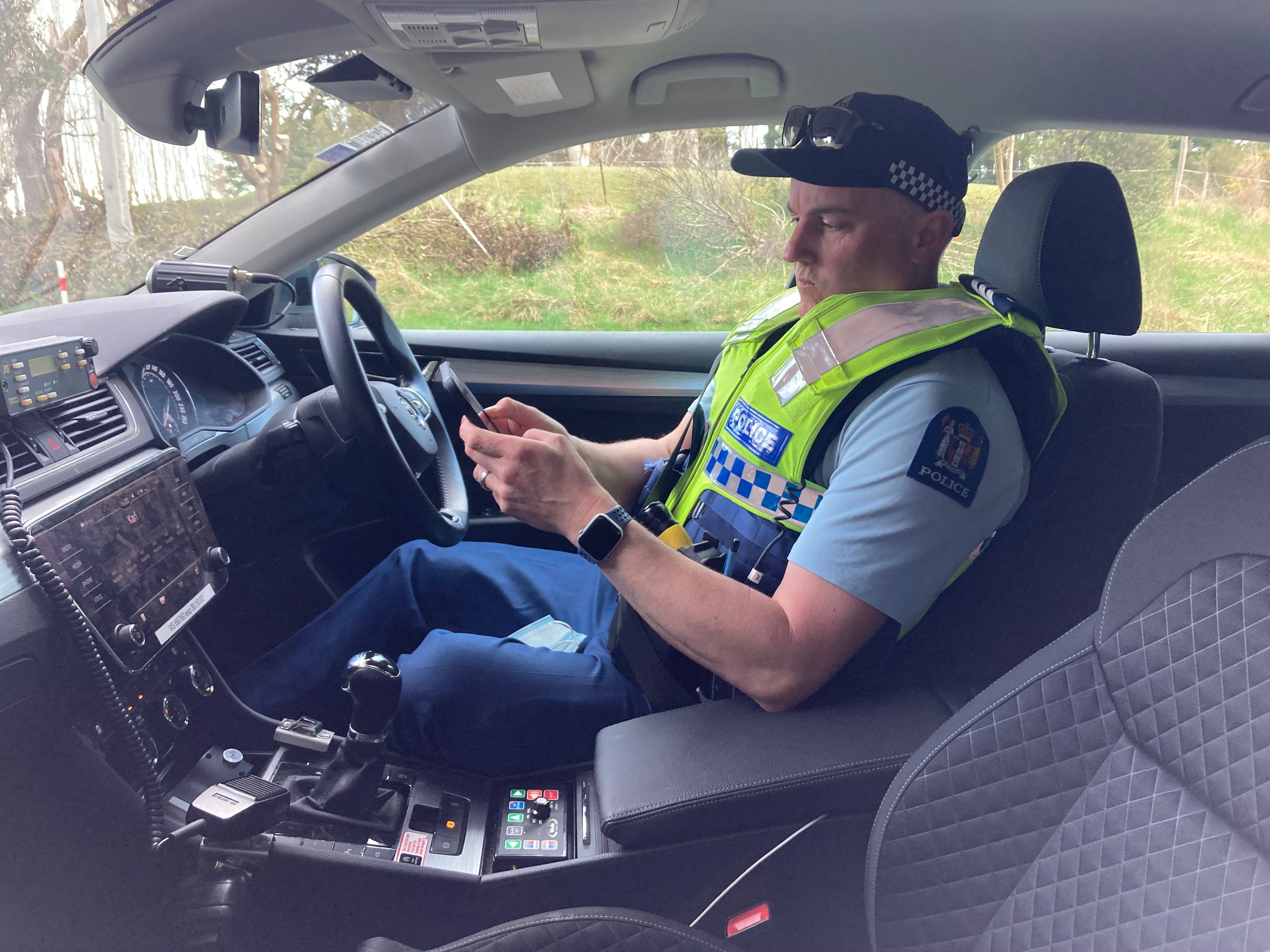
While Hemmingsen, who wears polarised sunglasses to help keep a lookout for offenders, is looking for speeding drivers, he is also looking for those on cellphones, not wearing seatbelts, dangerous driving, and drink-driving.
On the latter, Hemmingsen said many officers were sensitive to the smell of alcohol as their years on the frontline they start to associate the ‘‘smell of alcohol with bad things’’.
Impaired driving was a factor in about a third of all crashes, while a third of all deaths was due to unrestrained vehicle occupants.
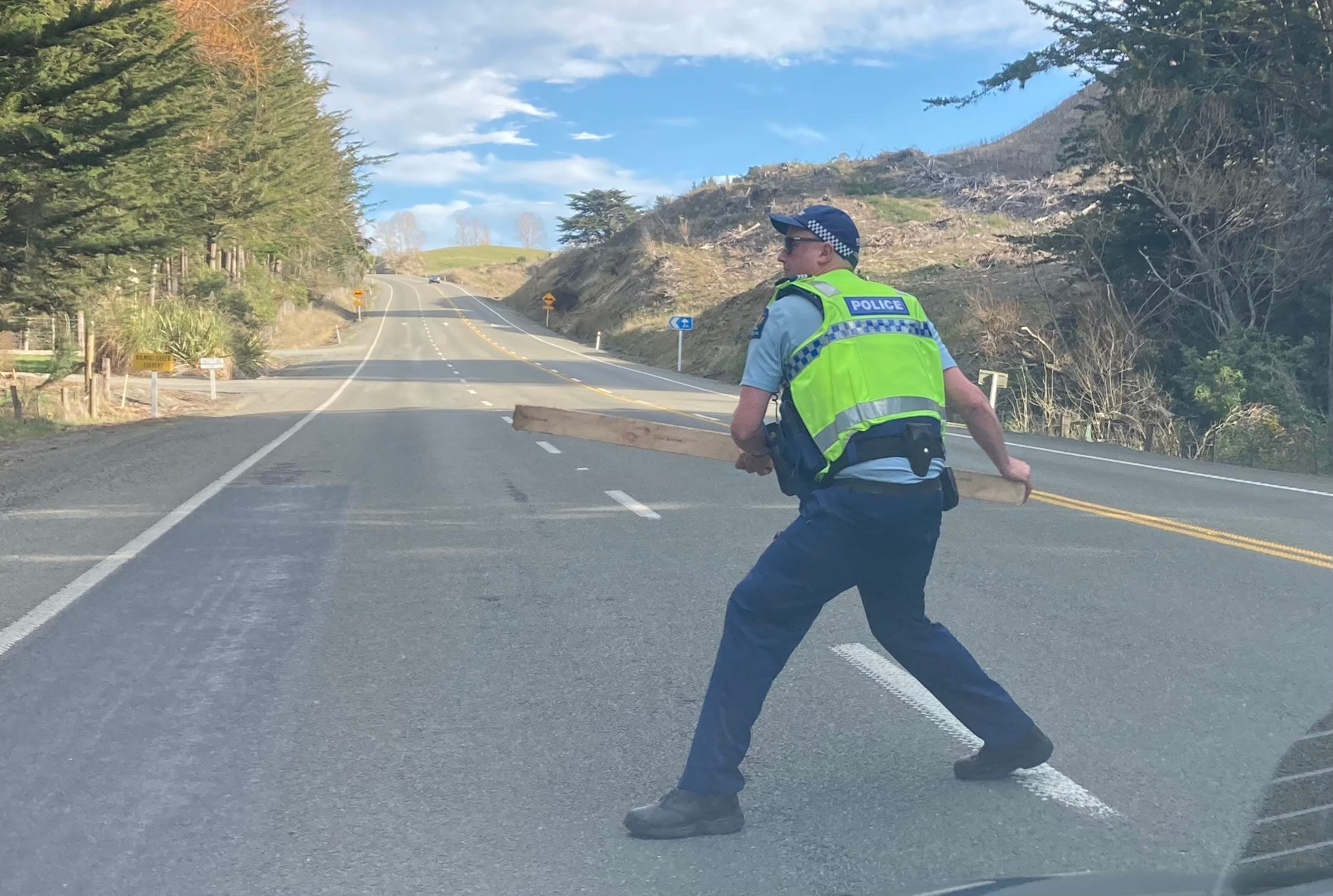
The first time he activates the police car’s lights is for something different, a large piece of 4x2 lying across the south-bound lane, and he removes it quickly.
Danger averted.
‘‘Sometimes you can go all the way to Oamaru and back and stop nothing, other times you are stopping every couple of kilometres.’’
Those officers in road policing still wore the vests, and were armed with tasers and pepper spray. And they need them, Hemmingsen said.
‘‘We are out in the middle of nowhere.’’
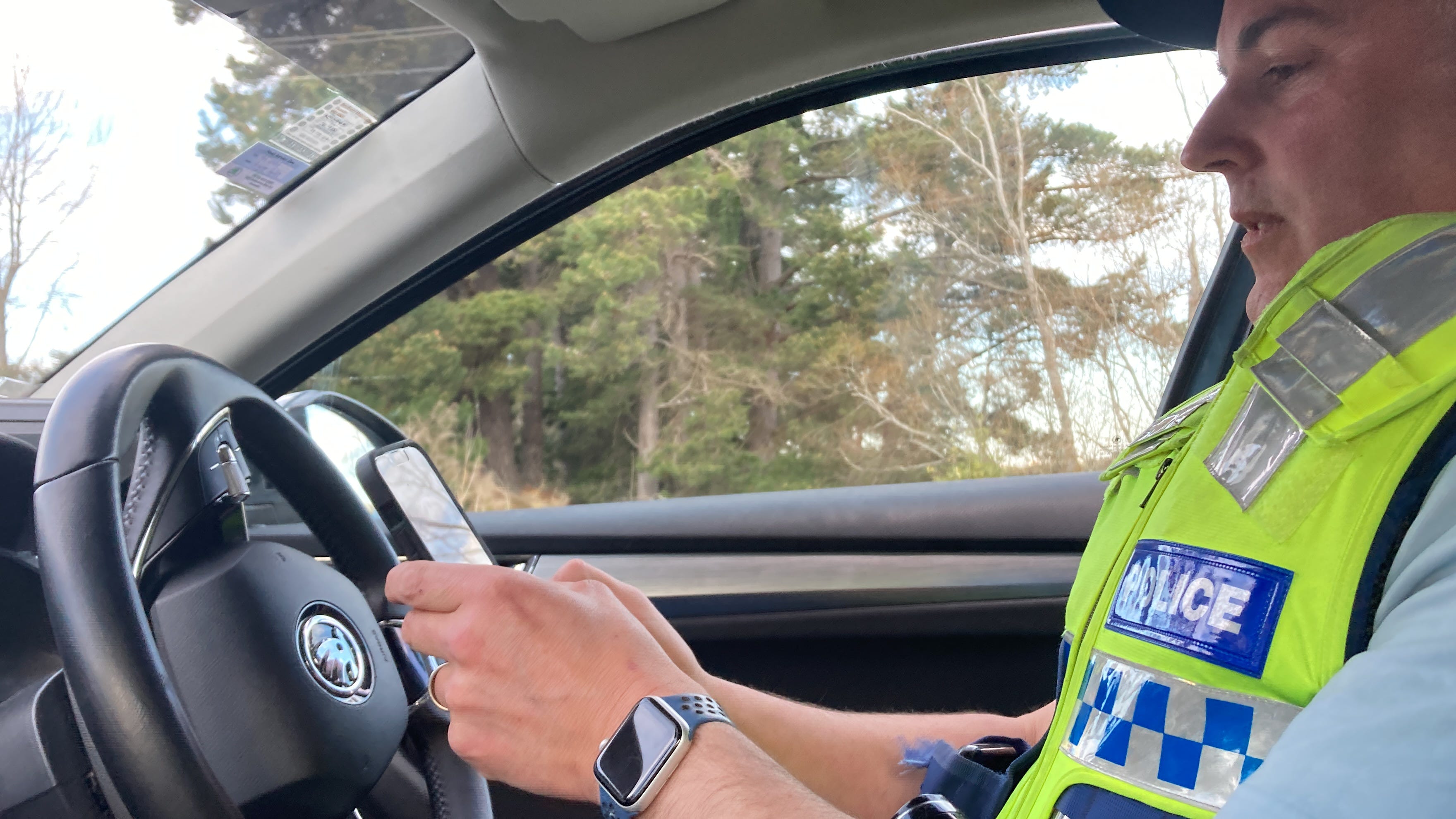
Officers also had to make a calculated decision on whether it was safe to turn and pullover a speeding motorist, ‘‘because to catch a speeder you have to speed’’.
‘‘It takes a long time to turn around and catch somebody.’’
And nor did he have a target to reach: ‘‘There is no quota’’.
After reaching Palmerston, 54km north of Dunedin, Hemmingsen turns around, and it is not long before the speed radar records a driver of a 4WD speeding at 113kmph.
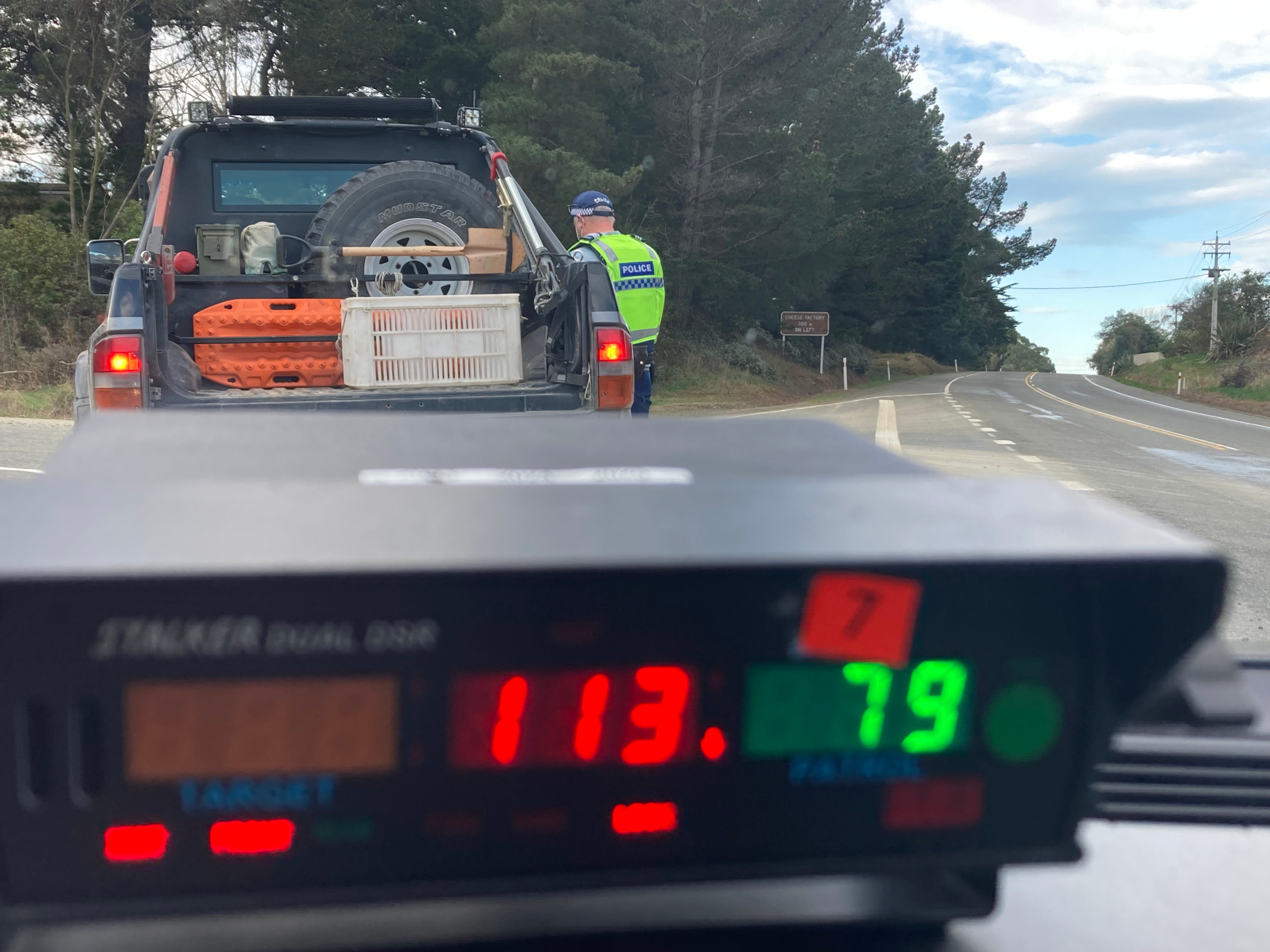
That driver, who was driving back from Dunedin after getting a tattoo, also has something else to take home – an $80 infringement notice and 20 demerit points.
But at least he and his new tattoo will make it home.
Thanks for sharing Karl, that was an amazing experience.
Here’s a mayoral profile featuring Jules Radich:
Tell us about yourself, and why you want be mayor of Dunedin
I’m a businessman and company director with an Otago science degree.
Dunedin is in a downward spiral of excessive ideological expenditure funded by ever-increasing debt and rising inflation, with workers vacating the city for green fields elsewhere. The plan to take transport back to the 50’s is wrong. Dunedin is disillusioned.
Dunedin deserves to be welcoming, vibrant and sustainable. I will listen and take positive action in the best interests of our community.
I am the only candidate with the team-building skills and business experience plus vision and strategy to balance competing agendas and steer a successful course for the city.
What are the biggest issues facing Dunedin next term, and what are your solutions?
Taking us back to the 50’s by destroying our 1-Way system and trying to force us on the buses is wrong. We need a future-facing integrated transport plan that serves us, not one that enslaves us with slowness.
An ideology that says no expense is excessive and any debt level can be done is a proven road to ruin.
Landfill alternatives can save us millions, starting with plastic recycling, incineration and Burnside. Emissions progress not pontification. South Dunedin protected not neglected. 3-Waters needs a catchment solution with local control.
Lack of trust in Council can be repaired with inclusive participation.
If you had to vote for another mayoral candidate, who would you vote for and why?
Any of the current councillors have the experience and motivation.
Carmen is about people, Sophie is about policy and Lee is about principle, so take your pick.
Better yet, rank the four of us in order. Job done.
That is what I’ll be doing.
Thanks Jules.
It is an exciting day for lovers of crime fiction:


You can hear her and fellow Scottish crime writers: Craig Robertson, and Liam McIllvanney, at a tartan noir discussion at Archway 1 Lecture Theatre, on September 8, at 5:30pm. More info here.
I love that the New Zealand nickname for crime/noir writing is Yeah Noir. Perfect.
You might remember Pamela Taylor, the conspiracy theorist running for council who I wrote about last month?
Well, I tweeted her official DCC candidate profile, and people are fascinated by the policies, particularly those hot button local issues of making roads straight and getting rid of lithium batteries.


I’d like to wish a happy birthday to one of our greatest New Zealanders, Chris Knox.
Thanks for reading, and keep those tips coming.
The correct european translation of Ōtepoti is Dunedin. So Pamela is either wrong here, or, she is rightly pointing out the O in Ōtepoti should have a macron. Either way she won't get my pōti.
Hamish. Why is it not newsworthy that I've been banned from Philip Somerville's Opoho stop;
https://plebeianresistance.substack.com/p/update-on-the-conversation-with-philip
And also from Radio One's profiles of Mayoral candidates next week;
https://plebeianresistance.substack.com/p/the-delicate-hehims-at-radio-one
I'm sure that if it had been Aaron Hawkins or Pamela Taylor you'd centre it.
Sophie Barker also reckons that she's a 'values based candidate' and then states this on her blog
"Plus the Transphobia exhibited by a number of other candidates."
https://sophieformayor.com/2022/08/24/otago-university-speed-dating/
That looks like libel if she'd been brave enough (but of course she's not) to put names to it. Nothing positive there just whinging for the sympathy and men in skirts (and your changerooms) vote. How about attending to this negative campaigning?
And your stoush with Lee Vandervis looks like a vendetta to me, not journalism.
I'd like to see evidence that you are actually a journalist. Because it's not evident at the moment.
Cheers Hamish